Jaw crushers handle high compressive strength rock well but require finer secondary processing. Cone crushers deliver better shape and capacity but need pre-crushing. Choose based on feed size, product shape, and plant layout.
- Jaw crushers absorb high compressive strength but produce irregular particle shapes.
- Cone crushers create better shaped products and operate at higher capacities.
- Feed size and ore hardness determine the primary crusher choice.
- Secondary processing needs can shift the optimal crusher type.
- Vendor data sheets must match the specific rock hardness and moisture content.
Defining the Crushing Challenge
Hard rock applications demand different crusher behavior than softer materials. The rock resists fracture, so the crushing chamber must generate enough force to break the material. This force creates high wear on wear plates, hammers, and mantles. The selection process centers on how much energy the crusher can absorb without jamming or overloading.
In a granite or dolerite processing plant, the feed material contains interlocking minerals and quartz veins. These features resist the compressive load applied by the crusher. If the machine cannot apply sufficient force to fracture the rock, the material accumulates in the chamber. This accumulation causes the motor to draw excess current, triggering overload trips or damaging the drive components. The crusher must therefore be selected to match the Mohs hardness and compressive strength of the specific ore body.
The two main options for primary crushing are jaw crushers and cone crushers. Jaw crushers use a moving jaw to close on the feed. Cone crushers use a rotating mantle inside a fixed concave. Each machine has a distinct failure mode and a distinct product profile. The choice depends on the ore, the feed size, and the downstream equipment. A plant processing a mixed ore with high hardness usually cannot rely on a single machine to handle the entire range of feed sizes. The engineering team must define the primary and secondary crushing stages based on the material behavior.
How Each Crusher Breaks Rock
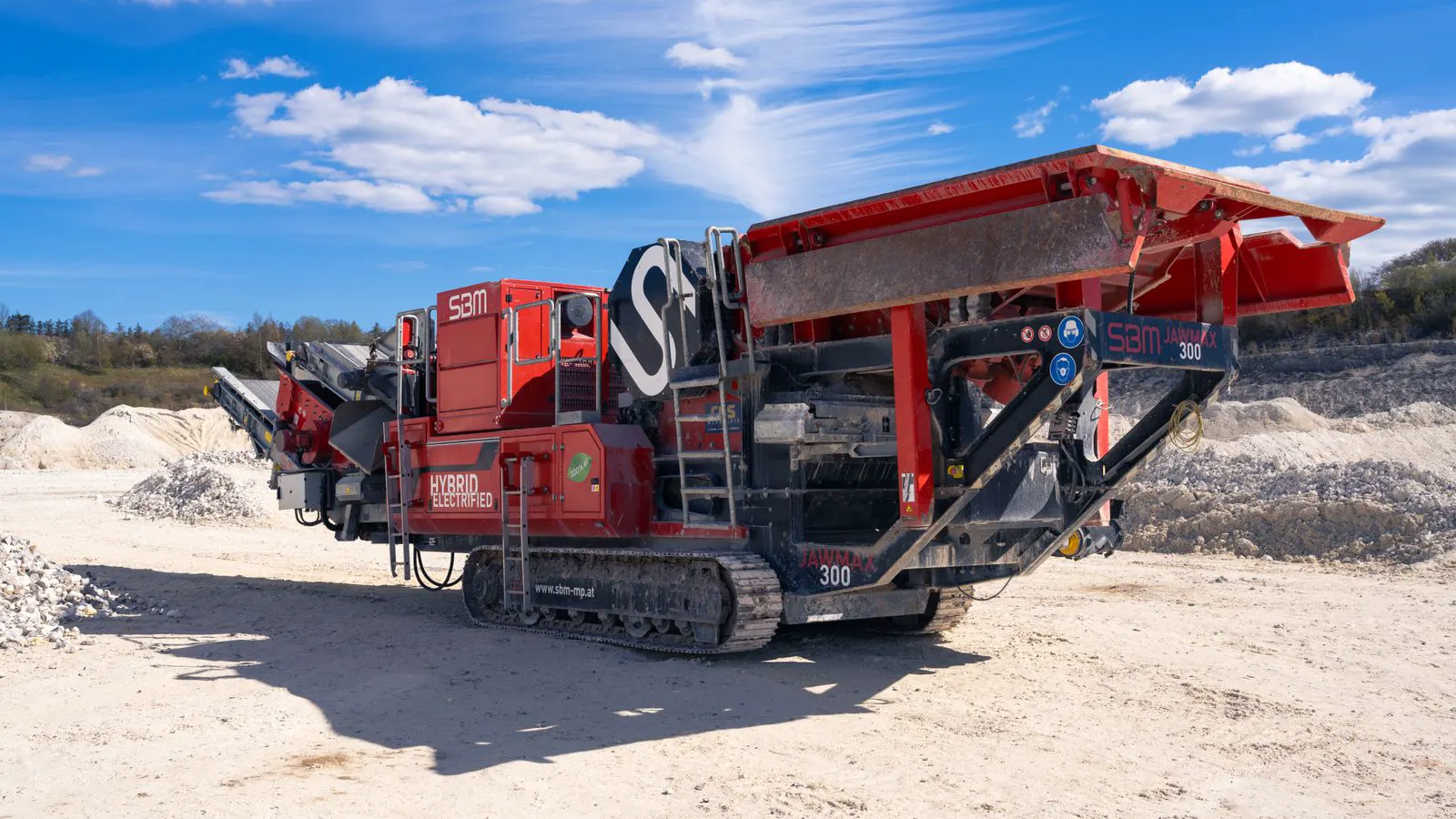
A jaw crusher operates by closing a crushing gap. The fixed jaw and the moving jaw form a V-shaped chamber. The feed falls into the chamber and is broken by the movement of the jaw. The gap size sets the minimum product size. The material is gripped by the teeth on the fixed jaw and the surface of the moving jaw. As the jaws close, the rock is compressed until the compressive stress exceeds the fracture strength. The material then breaks into smaller pieces that can fall through the gap.
A cone crusher uses a rotating conical mantle. The mantle moves in a gyrating motion inside a fixed concave. The gap between the mantle and the concave controls the product size. The crushing action is more continuous. The particles tumble and break against each other. The mantle surface is often textured or grooved to maintain the grip on the feed. This design allows for a larger throughput per unit of power compared to a jaw crusher for similar feed sizes.
The jaw crusher applies force directly to the rock. The cone crusher applies force through a rotating assembly. This difference affects the machine response to hard inclusions. A jaw crusher may jam if a large piece hits the fixed jaw. The fixed jaw does not move, so the obstruction can wedge the chamber. The machine may need to be stopped and the obstruction removed manually. A cone crusher may take a longer time to clear a jam, but the rotating action often helps eject the obstruction. The eccentric motion of the mantle creates a pumping effect that can dislodge stuck material.
Key Selection Factors
The first factor is the compressive strength of the rock. Hard rock requires a crusher with high breaking force. Jaw crushers are built for high compressive strength. They can handle material that would be too difficult for a cone crusher to start. The jaw mechanism is designed to withstand high impact loads. The frame and drive components are reinforced to absorb the shock of breaking large, hard chunks. In contrast, cone crushers rely on continuous grinding and crushing. They are more sensitive to sudden impact loads from unbroken hard rock.
The second factor is the feed size. If the feed is large, a jaw crusher is usually the primary choice. Cone crushers work best when the feed is already reduced. A cone crusher has a smaller crushing chamber entrance compared to a jaw crusher. If the feed size exceeds the maximum allowable diameter, the cone crusher will jam. The engineering team must calculate the maximum feed size based on the crusher model and the expected ore characteristics.
The third factor is the product shape. Cone crushers produce better shaped particles. Jaw crushers produce irregular shapes. The product shape matters for the next stage of processing. Well-shaped particles pack more efficiently in mills and screens. This improves the grinding efficiency and the recovery rate in the flotation or leaching circuits. Irregular particles from a jaw crusher may require additional grinding to achieve the desired particle size distribution.
The fourth factor is the plant layout. Some plants have limited space. A jaw crusher may be easier to install in a compact area. A cone crusher may require more room for the rotating assembly. The cone crusher also requires space for the hydraulic system and the gear drive. The structural supports must be designed to handle the dynamic loads. The vibration isolation pads and the foundation must be checked against the manufacturer’s specifications.
The fifth factor is maintenance. Jaw crushers have fewer moving parts. Cone crushers have more complex bearings and gear drives. The maintenance team must be prepared for the specific machine. The cone crusher requires regular inspection of the mantle and concave wear. The jaw crusher requires regular inspection of the jaw plates and the tie rod. The availability of trained technicians in the local region also influences the selection.
Comparing the Two Options
The table below shows the practical differences between the two crusher types.
| Factor | Jaw Crusher | Cone Crusher |
|---|---|---|
| Breakage force | High | Moderate to high |
| Feed size | Large | Reduced |
| Product shape | Irregular | Better shaped |
| Wear pattern | Jaw plates | Mantle and concave |
| Jam response | Direct impact | Rotational ejection |
The jaw crusher wins on initial breaking force. The cone crusher wins on product quality and capacity. The decision is not about which machine is better. It is about which machine fits the rock and the plant. The engineering team must evaluate the total cost of ownership, including capital cost, power consumption, and replacement intervals. The initial purchase price is only one part of the equation.
How Selection Affects Sourcing
The crusher choice changes the vendor conversations. When sourcing a jaw crusher, the focus is on the jaw plate material. Hard rock requires wear-resistant plates. The vendor should provide data on the plate thickness and the expected replacement interval. The plate material can range from standard carbon steel to high-chromium cast iron. The hardness and toughness of the plate determine how long it will last in the crushing chamber. The vendor must confirm that the plate geometry matches the manufacturer’s specifications.
When sourcing a cone crusher, the focus is on the mantle and concave. The shape of the mantle affects the product. The vendor should provide samples or drawings of the crushing surface. The gap setting is critical. A small change in the gap changes the product size significantly. The hydraulic system allows for fine adjustment of the gap. The vendor must provide the hydraulic pump data and the cylinder specifications. The wear parts must be compatible with the existing plant infrastructure.
The sourcing team must check the power requirements. Hard rock needs more power. The electrical service must be sized correctly. The vendor should provide the motor data and the gearbox data. The motor must be rated for the continuous load and the starting torque. The gearbox must be rated for the input power and the output speed. The electrical connections must be checked for voltage drop and current capacity.
The sourcing team must check the wear parts. The availability of wear parts in the local market affects the operating cost. If the wear parts are hard to source, the operating cost rises. The vendor must provide the parts data and the lead times. The plant must stock critical wear parts to avoid downtime. The maintenance schedule must include regular inspections and replacements.
A Worked Example
Imagine a mine processing hard granite. The feed is large. The rock is very hard. The first option is a jaw crusher. The jaw crusher takes the large feed and breaks it into smaller pieces. The product is irregular. The jaw crusher is selected for its ability to handle the high compressive strength of the granite. The feed size is within the jaw crusher’s maximum capacity. The plant operates the jaw crusher as the primary crusher.
The second option is a cone crusher. The cone crusher cannot take the large feed. It needs a pre-crushing stage. A jaw crusher or a rock breaker must reduce the feed first. The cone crusher then takes the reduced feed and produces a better shaped product. This configuration is common in plants where the product shape is critical for downstream processing. The cone crusher is selected for its ability to produce a well-shaped product.
The plant layout decides the final choice. If the plant has space for two crushers, the cone crusher is a strong option. If the plant has limited space, the jaw crusher is the practical choice. The downstream equipment must match the product. A screen with a specific hole size must match the crusher product. The screen size determines the oversize fraction that returns to the crusher. The crusher must be sized to handle the oversize fraction.
Common Mistakes in Selection
The first mistake is choosing the crusher based on capacity alone. Capacity is not the only factor. The rock hardness matters more. A crusher that is too small will jam. A crusher that is too large will be expensive to buy and run. The engineering team must evaluate the total cost of ownership. The capacity must be calculated based on the specific ore characteristics.
The second mistake is ignoring the feed size. If the feed is too large for a cone crusher, the machine will jam. The feed must be reduced first. The engineering team must check the maximum feed size for the selected crusher. The feed size must be reduced to below the maximum allowable diameter.
The third mistake is assuming the product shape will be the same. Jaw crushers and cone crushers produce different shapes. The downstream equipment must be matched to the product. The screen size and the mill feed size must be adjusted to match the crusher product. The plant must monitor the particle size distribution and adjust the gap settings accordingly.
The fourth mistake is not checking the wear parts. If the wear parts are not available, the operating cost rises. The vendor must provide the parts data. The plant must stock critical wear parts to avoid downtime. The maintenance schedule must include regular inspections and replacements.
Final Selection Criteria
The final decision rests on a few checks. The rock hardness must be measured. The feed size must be measured. The product requirement must be defined. The plant layout must be mapped. The engineering team must evaluate the total cost of ownership. The vendor data must be checked against the specific conditions.
The jaw crusher is the better choice for high compressive strength rock with large feed. The cone crusher is the better choice for reduced feed and better product shape. The sourcing team must match the machine to the rock and the plant. The vendor data must be checked against the specific conditions. The plant must monitor the performance and adjust the settings as needed. The maintenance team must be trained on the specific machine.
Frequently asked questions
Which crusher handles harder rock better?
Jaw crushers are generally better for very hard rock with large feed. They apply higher breaking force directly to the material.
Can a cone crusher handle large feed?
No. Cone crushers need reduced feed. A large feed will jam the crusher. A pre-crushing stage is required.
What is the main difference in product shape?
Cone crushers produce better shaped particles. Jaw crushers produce irregular shapes. The product shape matters for the next processing stage.
How does the selection affect sourcing?
The selection changes the parts and power requirements. Jaw crushers need strong jaw plates. Cone crushers need specific mantles and concaves.
What is the biggest mistake in crusher selection?
Choosing based on capacity alone. The rock hardness and feed size matter more than the capacity number.