Fixed belt conveyor systems suit stable, high-volume routes where material must move continuously. Mobile trucking fits flexible routes, remote deposits, and sites with changing extraction plans. The choice depends on throughput, distance, terrain, and capital constraints.
- Belt conveyor systems provide continuous flow but require stable alignment and significant upfront infrastructure.
- Truck hauling offers route flexibility and easier scaling but consumes fuel and requires more maintenance.
- Site layout, throughput, and extraction plans determine which method fits best.
- Hybrid approaches often balance fixed conveyors with mobile haulage for specific legs of the route.
- Operator skill, safety systems, and spare parts availability affect long-term hauling efficiency.
What drives the choice between belt and truck
The decision starts with site geometry and material behavior. A fixed route with stable ground and a consistent feed rate favors continuous equipment. A site that shifts extraction points, works across open terrain, or needs seasonal route changes favors mobile units.
Belt conveyor systems move material on a continuous loop. Trucks move it in discrete loads. That difference shapes capital cost, operating cost, energy use, and the flexibility of the operation.
Before selecting a method, engineers must define the material stream in detail. The particle size distribution determines the belt width and truck payload capacity. The bulk density dictates the volume per truckload and the mass per belt meter. The abrasion index affects belt life and truck body wear. The moisture content determines whether the material will bridge in the hopper or stick to the belt. Ignoring these physical properties leads to equipment that cannot handle the load, resulting in early failure or chronic downtime.
How belt conveyor systems perform on stable routes
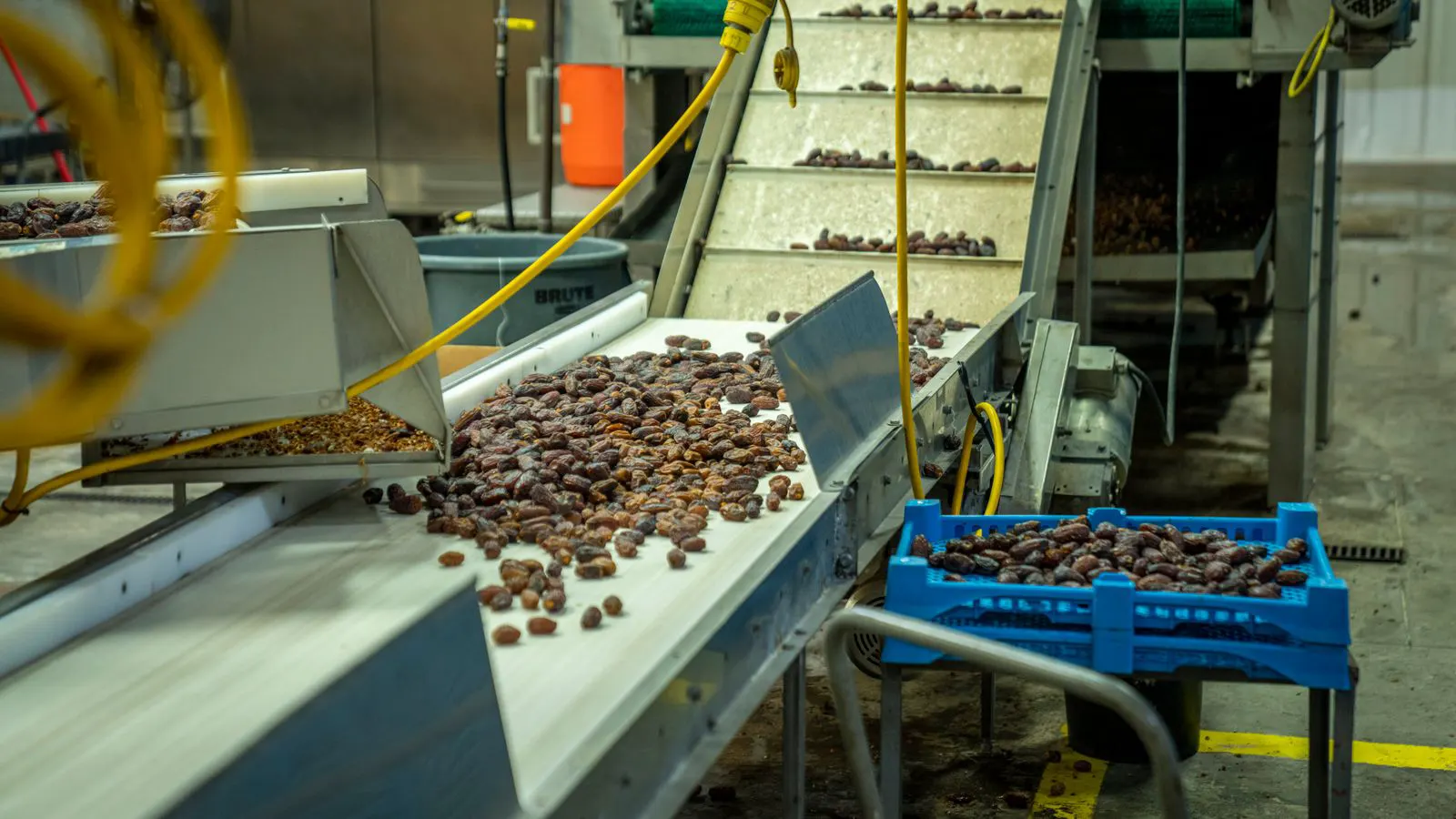
Belt conveyors excel when the path is known and the material feed is steady. They move material at a constant speed. Loaders and feeders must match that pace, or the system jams or starves.
Concrete examples matter here. A run of 1,000 meters with a fixed loading point at the pit and a fixed discharge at the crushing plant is a strong candidate. The same logic applies to a transfer leg between two fixed processing units. The belt width, speed, and belt grade must match the material size and volume.
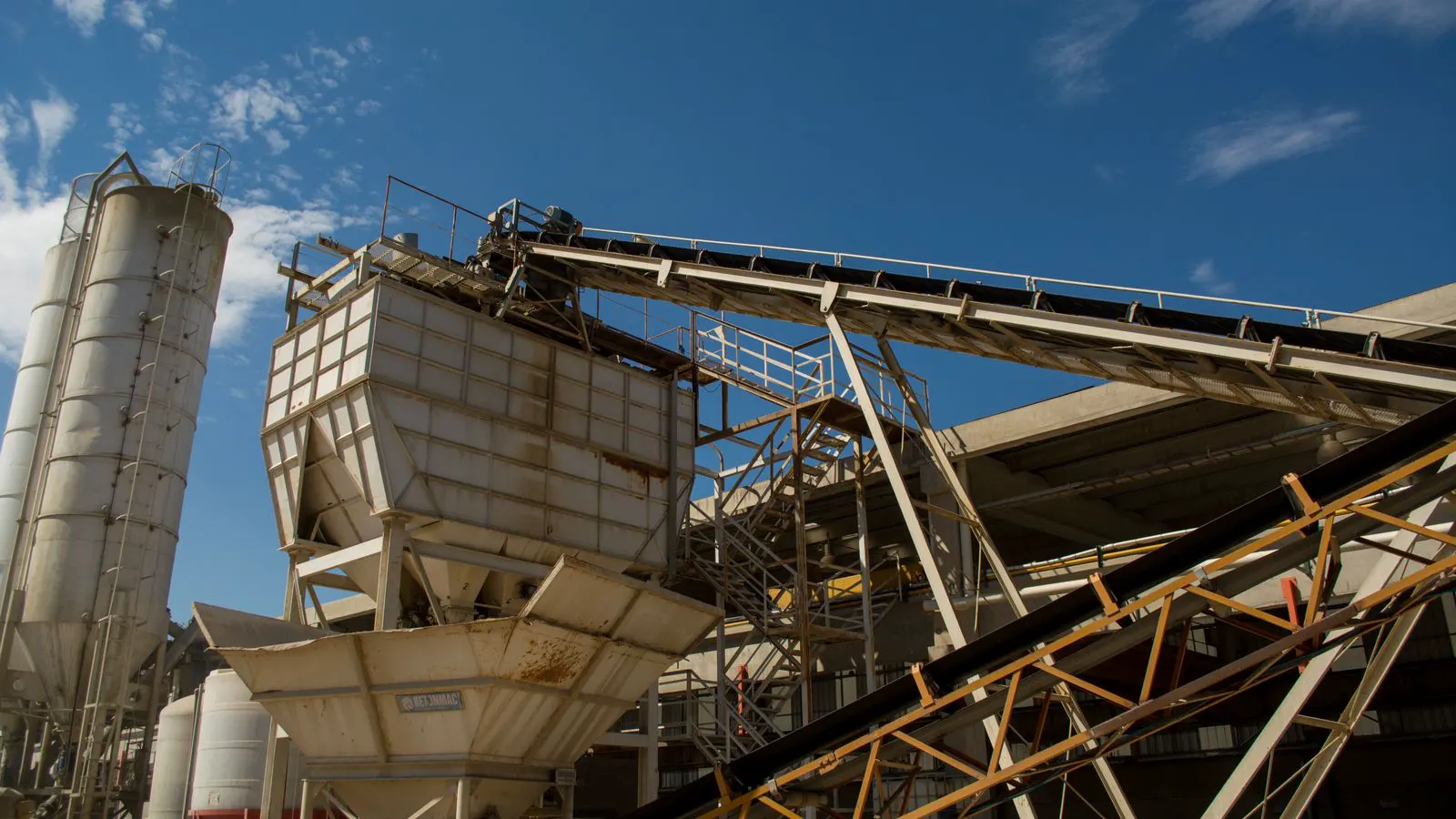
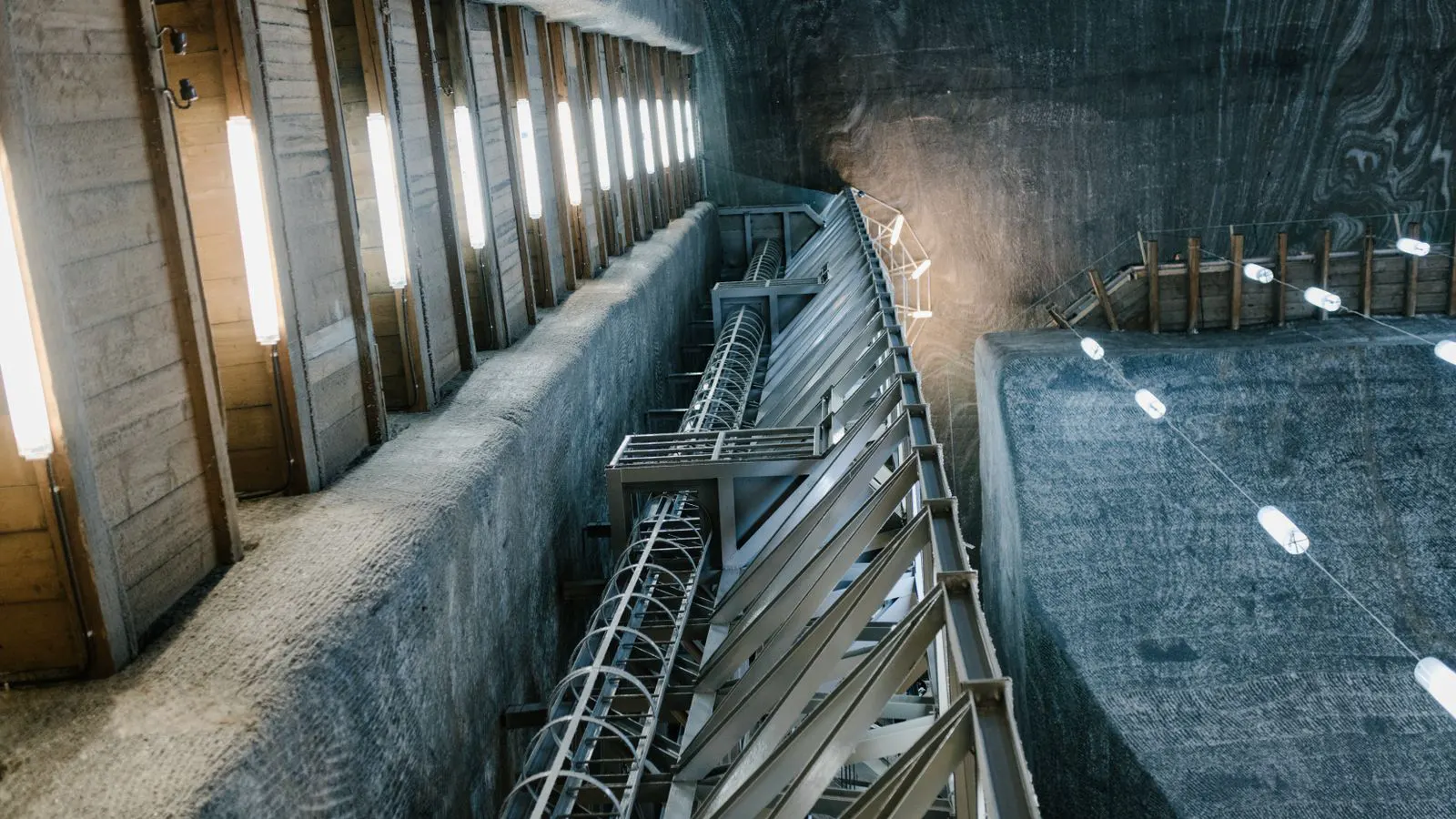
The main constraints are alignment and maintenance. A belt that runs out of alignment wears quickly. Pulleys, rollers, and idlers need inspection. Truss and support structures need corrosion protection. The system also needs reliable feed control. If the loader dumps too fast, a surge occurs. If the loader stops, the belt idles and material can pile up.
In a stable environment, the conveyor runs for thousands of hours without intervention. The drive motor and gearbox operate at a fixed load. The electrical system sees a constant power demand. This predictability allows for precise energy management. The belt itself acts as the working surface. Its tension must be managed so it does not slip on the drive pulley but also does not stretch excessively. The idlers, or rollers, support the belt and guide it around the return path. If an idler seizes, the belt edge can be cut. If the belt tracking is off, the material piles on one side, creating a lopsided load that stresses the bearings.
How truck haulage performs on flexible routes
Truck haulage fits sites where the route changes. An open-pit mine that moves the pit wall each month often needs trucks. A heap leach pad that reworks stockpiles needs trucks. A remote deposit that requires a temporary road also points to mobile transport.
Hauling efficiency depends on the truck cycle. Cycle time includes load time, travel time, unload time, and empty return time. Fuel consumption, tire wear, and driver hours all feed into the operating cost. A shorter cycle and a larger payload usually improve efficiency.
The trade-off is energy and labor. Trucks burn fuel. They need drivers. They need maintenance bays. They also need safe roads. Road grade, surface condition, and traffic management affect speed and safety. A truck can reroute around a blocked area. A belt cannot.
Truck haulage offers a level of adaptability that fixed systems cannot match. If a section of the pit becomes unstable and the loading point must move 200 meters to the north, the truck simply drives to the new spot. The road may need a small grading pass, but the transport function continues. For a conveyor, this change would require tearing down the truss, relocating the supports, and potentially replacing the belt if the alignment changes.
The truck fleet acts as a buffer. If the crusher goes down for maintenance, trucks can continue to move material to a temporary stockpile. They can then feed the crusher once it is back online. A conveyor cannot do this. If the crusher stops, the belt must stop to prevent material from piling up on the discharge end. This stops the flow from the pit as well, halting the entire extraction process.
When fixed conveyors beat mobile hauling
Fixed conveyors win when the material must move continuously and the route is stable. A crushing plant with a single feed belt and a single discharge point is a classic case. A stockpile feeder that feeds a process unit also fits.
The material itself matters. Small, clean material flows well on a belt. Large, sticky, or abrasive material can damage the system. Moisture content can cause buildup on the belt or at the discharge. The belt surface and idler spacing must match the material.
The operator also matters. A belt system needs skilled maintenance. If the crew cannot inspect the belt, check the drive, or manage the feed, downtime rises. The site must have a stable power supply. A generator can work, but it adds cost and complexity.
Belt systems provide a lower cost per ton over long distances. Once the infrastructure is in place, the marginal cost of moving an additional ton is low. The energy is consumed by the drive motor and the idler friction. There are no tires to replace, no fuel to store, and no drivers to schedule. For a continuous operation, the reliability of the belt can be very high. The mechanical components are fewer and more predictable than the thousands of moving parts in a truck engine and drivetrain.
However, the initial capital outlay is significant. The site must support the weight of the truss structure. The foundations must be able to handle the load. The electrical infrastructure must be capable of delivering the power without voltage drops that could stall the drive. These are fixed costs that must be recovered over the life of the operation.
When truck haulage beats fixed conveyors
Truck haulage wins when the route is not fixed. A pit that moves each year needs trucks. A site that adds or removes processing legs needs trucks. A remote site where a fixed structure is too expensive to build and maintain needs trucks.
Trucks also win when the material changes. A plant that processes several ore types with different densities and sizes can feed trucks without rebuilding the conveyor. A truck can carry a load to a new discharge point. A belt needs a new truss, a new pulley, and a new drive.
The labor model matters too. Some operations prefer to hire local drivers and maintain a local fleet. Others prefer to buy or lease a belt system and run it with a small technical team. The site layout and the labor market both influence the choice.
In many open-pit scenarios, the extraction face moves as the pit deepens. The distance from the loading area to the crusher may increase over the life of the mine. A truck can easily handle a haul distance of several kilometers. A belt of that length requires a massive structure and a high power rating. The cost of extending a belt is linear but steep. The cost of adding a truck to a fleet is additive but often cheaper per unit of flexibility.
A side-by-side comparison
| Option | Best for | Limitations |
|---|---|---|
| Belt conveyor systems | Stable routes, continuous feed, high throughput | High upfront cost, fixed alignment, material-sensitive, power-dependent |
| Truck haulage | Changing routes, remote sites, mixed material | Fuel and labor cost, cycle time, road maintenance, driver availability |
| Hybrid layout | Fixed legs plus mobile legs | More equipment to manage, transfer points add complexity |
| Cable or bucket haulage | Steep or long fixed routes | Very high capex, specialized skills, limited flexibility |
The table shows the trade-offs in plain form. Each option has a sweet spot. The site layout decides which sweet spot you are in.
How to match the method to your site
Start with the material flow diagram. Mark the loading points, discharge points, and any transfer points. Measure the distances. Check the grades and surface conditions. Then estimate the daily throughput.
If the route is under 500 meters and the material is clean, a belt may be simpler. If the route is over 1,500 meters and the material is large, a belt may still work, but the cost of the structure rises. A truck may be cheaper to start and easier to move.
Check the operational plan. Will the extraction area move? Will the crushing plant expand? Will a new ore type be processed? If the answer is yes, plan for flexibility. If the answer is no, plan for efficiency.
A practical test is to model the cycle. For trucks, estimate the load time, travel time, unload time, and return time. For belts, estimate the feed rate and the discharge rate. Compare the capital and operating costs over the expected life of the route. The model should include spare parts, maintenance labor, and downtime.
When building the model, include the environmental factors. Dust suppression is a major operating cost for truck haulage. Roads must be regularly wetted or treated to control dust. This requires water infrastructure and maintenance. Belts also generate dust at the transfer points, but the containment is often easier to manage with enclosed chutes and dust collectors.
Also consider the noise footprint. A fleet of heavy trucks generates significant noise and vibration. In some areas, this is a regulatory constraint. A belt system is quieter and produces less vibration. This can simplify permitting and reduce community complaints.
Common mistakes to avoid
The first mistake is choosing based on one day’s throughput. A site that runs at 80 percent capacity today may need 150 percent next year. The equipment must match the plan, not just the current shift.
The second mistake is ignoring the feed. A belt that runs at 100 percent speed but receives material at 60 percent speed will not run smoothly. The feed must match the belt.
The third mistake is underestimating the maintenance. A belt needs routine checks. A truck needs routine checks. Both need trained people. The site must have the staff and the parts.
The fourth mistake is forgetting safety. A belt needs guarding, emergency stops, and spill control. A truck needs road markings, traffic management, and driver training. Both need a clear procedure for shutdown.
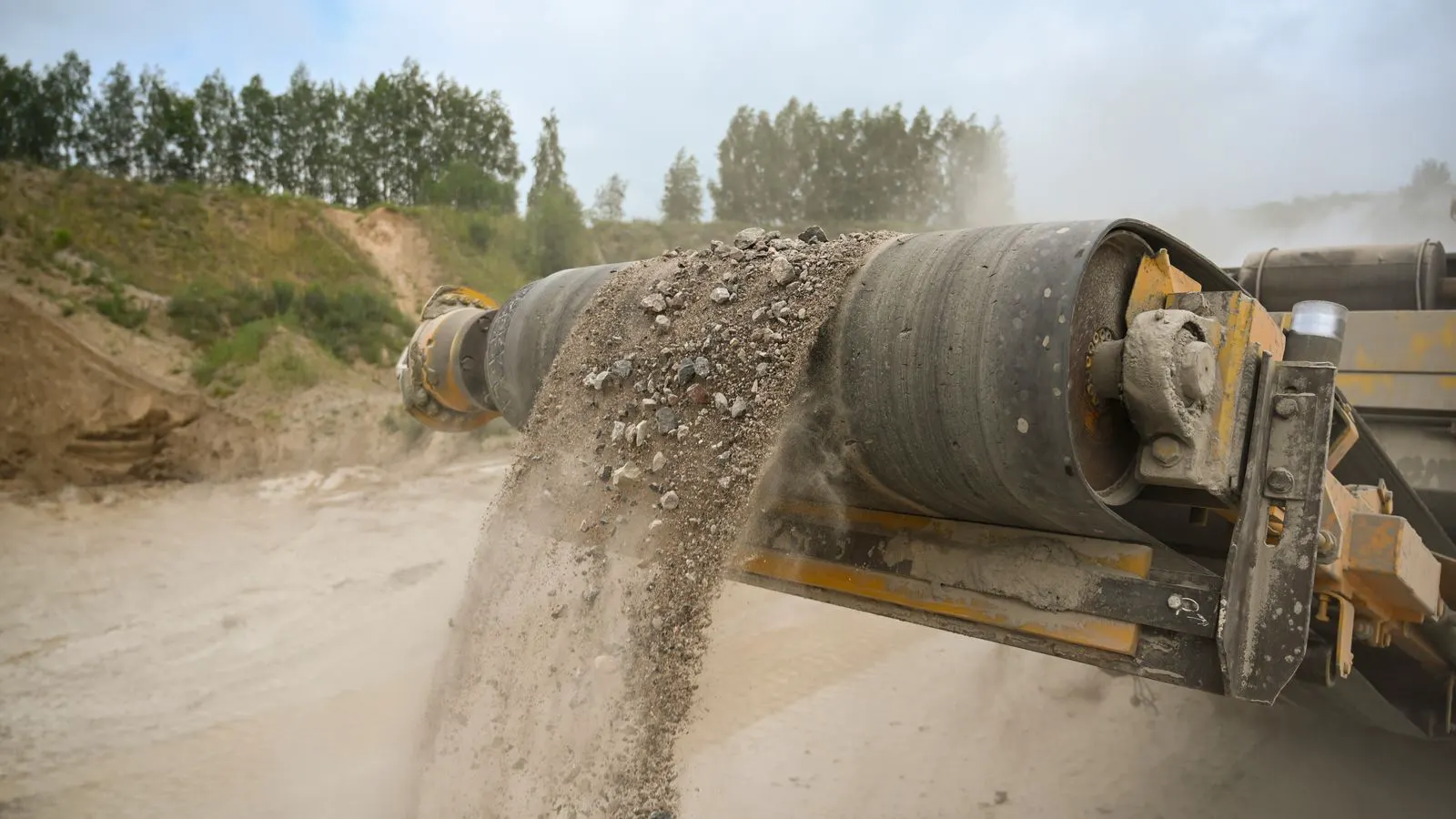
Another common error is neglecting the discharge point. For trucks, the dump area must be able to handle the impact of the load. If the truck dumps into a pile that is too high, it can push the material back into the truck. For belts, the discharge chute must be designed to break the momentum of the material. If the chute is too short or angled poorly, the material will impact the belt at the end, causing wear and tearing.
Final selection criteria
The right method is the one that matches the site. Belt conveyor systems fit stable, high-volume routes. Truck haulage fits flexible, remote, or changing routes. Hybrid layouts fit sites that need both.
Look at the material, the route, the throughput, and the operational plan. Run the numbers. Check the maintenance. Check the safety. Then pick the method that keeps the material moving with the least disruption.
Frequently asked questions
Can I switch from trucks to a belt conveyor later?
Yes, if the route and material allow it. The site must have stable ground, a fixed loading point, and a fixed discharge point. The capital cost and lead time must fit the budget.
What material types work best on belt conveyor systems?
Clean, free-flowing material works best. Large, sticky, or abrasive material can damage the belt and idlers. The belt surface and idler spacing must match the material.
How does truck haulage handle changing site layouts?
Trucks can reroute easily. They can move to a new loading point or discharge point without rebuilding the structure. This makes them suitable for changing extraction areas.
What is the main cost difference between belt and truck hauling?
Belt conveyor systems have higher upfront capital cost but lower per-unit transport cost. Truck haulage has lower upfront cost but higher fuel and labor cost.
Can a site use both methods at the same time?
Yes. Many sites use a belt for a short fixed leg and trucks for a longer or changing leg. The transfer point must be designed for the material flow and the safety requirements.